

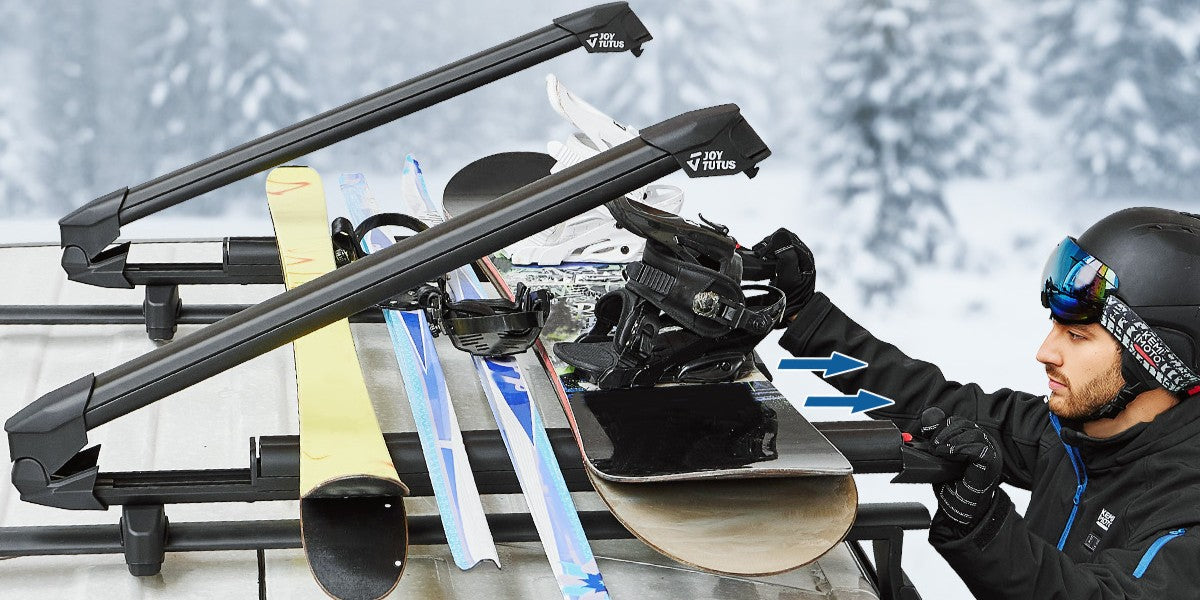
Getting skis and snowboards to the mountain sounds simple until you try to fit them in the back seat. Boards slide around, edges scratch the upholstery, and melting snow soaks the carpet. That is why a car ski rack is one of the most useful add-ons for winter driving. If you want more room inside, a cleaner cabin and safer gear, a ski rack for car trips can solve all three problems at once.
This guide explains how to transport skis and snowboards the right way. We cover the main types of ski racks for cars, including the roof ski rack and the hitch ski rack, then show you how to choose one and load it safely. We also look at two Joytutus options so you can compare before you buy.
Why You Need a Ski Rack for Car Trips
Most winter drivers run into the same few problems on the way to the slopes. A ski rack car setup fixes them by moving your gear outside the cabin.
Skis are long, hard, and sharp along the edges. Bindings snag seat fabric, and snow melts into floor mats. Boots, helmets and bags use up the rest of the space, so passengers end up squeezed in. A rack gives your gear its own spot and gives people room to sit comfortably.
Here is what most drivers want from one:
- More room inside for people, boots and bags
- Less damage to seats, trim, and the gear itself
- A drier cabin with no meltwater
- Locks for resort parking lots and roadside stops
- A quicker, easier loading routine
Types of Car Ski Racks
Most ski racks for cars mount in one of three places: on the roof, on the rear hitch, or inside the vehicle. What your vehicle already has will usually point you to the right choice. For a shorter overview, see the Joytutus guide on what a ski rack is.
Roof Ski Rack: The Most Common Choice
A roof ski rack clamps onto rails and holds skis and snowboards flat on top of your vehicle.
Many models carry up to six pairs of skis or four snowboards, depending on the size of your gear. A roof carrier needs crossbars or a factory roof rack to attach to, so a bare roof means buying a base system first. These carriers are light, easy to store and keep the cabin free. The trade-offs are an overhead reach when loading, some wind noise, and road salt on exposed gear. Always check the roof load limit in your owner’s manual. A sliding design helps because it brings the gear toward the side of the vehicle.

Hitch Mount Ski Rack: Load at a Comfortable Height
A hitch mount ski rack plugs into the receiver at the back of your vehicle, so you lift gear to waist height instead of over your head.
This helps a lot on tall SUVs and trucks, and it leaves the roof free for a cargo box. You do need a hitch receiver. The gear rides behind the vehicle, where it can catch road spray, so check that the rack does not block your license plate or lights. Also think about trunk or tailgate access. Some designs tilt away from the vehicle to solve that problem.

Cargo Boxes and Other Ski Racks for Cars
If you care more about protection than price, a few other options keep gear out of the weather.
A roof cargo box is fully enclosed, so skis, boots and bags stay dry. Most boxes run roughly 55 to 92 inches long, so check your ski length first. Boxes also work for road trips all year. An interior rack holds gear inside an SUV so it does not slide around, though it uses cabin space. Magnetic racks stick to a steel roof without crossbars, but they suit light loads and clean, flat steel only.
Ski Racks for Cars Compared at a Glance
This table puts the main options side by side so you can compare them in a minute.
|
Type |
Mounts to |
Typical capacity |
Best for |
Watch out for |
|
Roof carrier |
Crossbars |
Up to 6 pairs of skis or 4 snowboards on many models |
Budget buyers, cars with crossbars |
Overhead loading, road salt |
|
Hitch carrier |
Rear hitch receiver |
Up to 6 pairs or 4 boards on many models |
Tall SUVs and trucks, easy loading |
Needs a hitch, rear road spray |
|
Roof cargo box |
Crossbars |
Depends on box size |
Weather protection, extra gear |
Higher price, storage space |
|
Interior rack |
Inside an SUV |
Depends on model |
Keeping gear secured inside |
Uses cabin space |
How to Choose a Ski Rack for Car Use
Work through these steps in order. Most buyers can narrow it down to one style by step two.
- Check what your vehicle has. Crossbars point to a roof carrier. A hitch receiver points to a hitch ski rack. If you have neither, you may need to add one first.
- Count your gear. Add up the pairs of skis and boards for everyone in the car. Wide skis and thick boards can reduce capacity.
- Check your crossbar shape. Some carriers fit rectangular, aero and square bars but not round ones, so read the fit notes.
- Think about loading height. On a tall SUV or truck, a hitch carrier or a sliding roof carrier is easier on your arms.
- Look for locks and cold weather buildup. Rubber that stays flexible in freezing temperatures and large buttons you can press with gloves make a real difference.
- Check your limits. Your roof and hitch weight ratings are listed in the owner's manual. Stay under them.
- Compare warranty and returns. Good support matters when the rack protects expensive gear.
Joytutus Roof Ski Rack and Hitch Mount Ski Rack Options
Joytutus makes car-mounted racks for roofs and hitches. You can browse them all in the winter essentials collection.
Sliding Roof Ski Rack
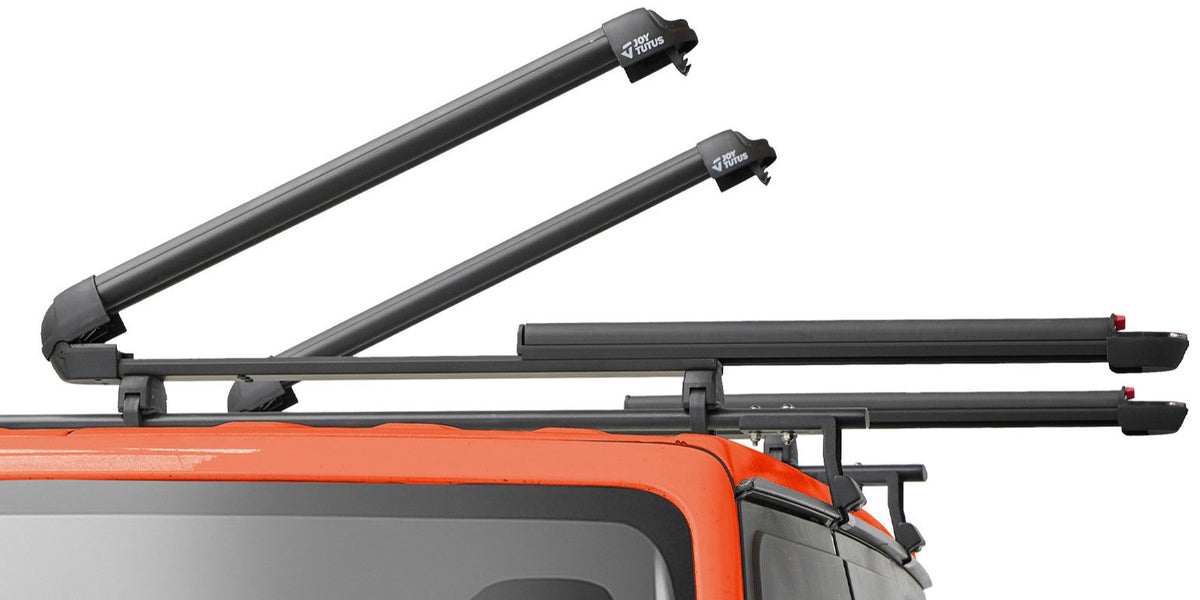
The Joytutus sliding roof ski rack suits vehicles that already have crossbars.
It carries up to 6 pairs of skis or 4 snowboards. The aluminum rack is 36.2 inches long, with a 27.6-inch sliding section that brings gear closer to the side of your vehicle. An integrated lock secures the rack and your gear, and four keys come in the box. It fits rectangular, aero and square crossbars, but not round ones. Installation takes about 30 minutes with no drilling, and two people are recommended. A non-retractable version is also available. If you need a base system first, browse the Joytutus roof racks.
Hitch Mount Ski Rack
The Joytutus hitch ski and snowboard rack is made for 2-inch receivers.
It tilts up to 120 degrees so you can reach the rear of your vehicle without unloading. Dual locking points secure both the carrier and your gear, and the cold-resistant rubber is made for freezing temperatures. It holds up to 6 pairs of skis or 4 snowboards. See more options in the hitch racks collection, or read how Joytutus approaches roof rack testing and safety.
Safe Loading Tips for Any Car Ski Rack
A good rack still needs good habits. These tips take only a few extra minutes.
- Read the manual and stay under your vehicle's roof or hitch load limit.
- Install with a second person, and recheck tightness after a short drive.
- Brush snow and ice off the rack and crossbars before you clamp gear in.
- Point ski tips toward the back of the vehicle to cut wind resistance.
- Lock both the carrier and your gear. If your hitch rack has no lock, run a cable lock through your skis and the hitch.
- Keep your license plate and taillights visible with a hitch rack. Rules vary by state, so check yours.
- Drive a little slower, watch for crosswinds, and remember your new roof height at garages.
- Wipe off road salt and dry your gear after each trip.
Conclusion
A ski rack is a small purchase that makes every winter trip easier. It keeps wet, sharp gear out of the cabin, protects your skis and boards, and gives your passengers room to breathe.
Start with what your vehicle already has. Rails suit a roof ski rack, and a receiver suits a hitch mount ski rack. Then match capacity, locks and loading height to the way you travel. If you want protection above all, add a cargo box. If you carry only a few sets, an interior rack may be enough. Whatever you choose, read the fit notes before ordering, stay within load limits and lock your gear. When you are ready to compare, visit the Joytutus winter collection.

Leave a comment
All comments are moderated before being published.
This site is protected by hCaptcha and the hCaptcha Privacy Policy and Terms of Service apply.