

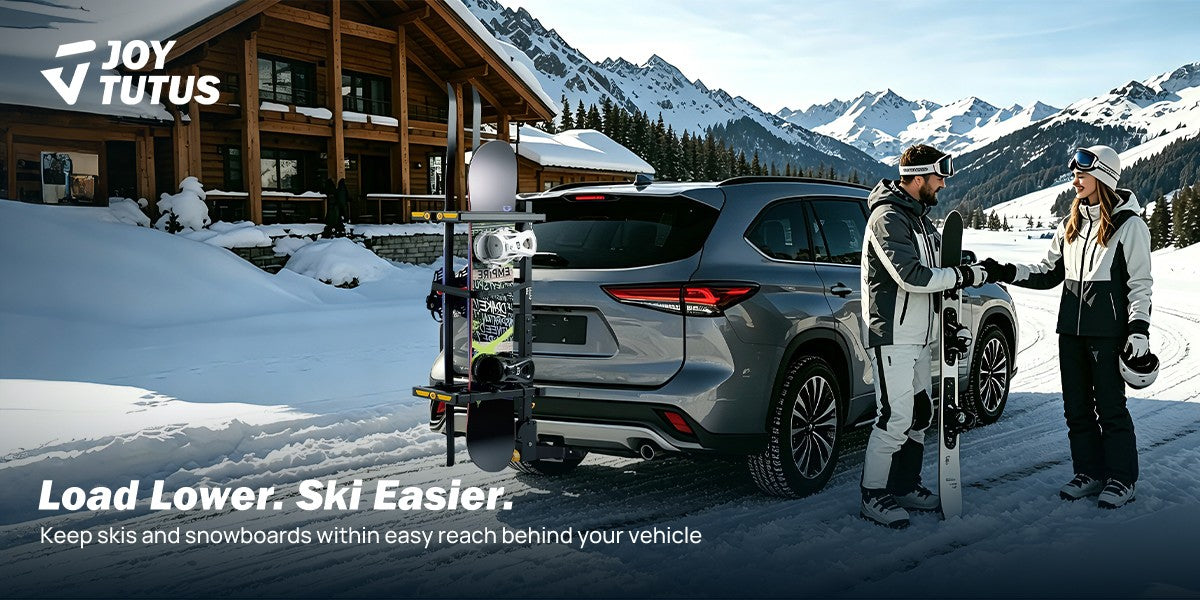
A ski rack is the easiest way to get your gear to the mountain without turning your car into a wet, cramped mess. If you have ever tried to fit long skis, boards, boots and bags into a back seat, you already know why people shop for ski racks. Most drivers want the same three things: more space, safer gear and an easier load. A good car ski rack can deliver all three.
This guide explains what a ski rack is and the two big types, car racks and storage racks. We will look at each ski and snowboard rack style for roofs and hitches, show you how to choose, and cover safe use. You will also see how Joytutus ski carrier options work, so you can compare before you buy.
What Is a Ski Rack and Why Do You Need One?
A ski rack is a holder that keeps skis and snowboards in one place, either on your vehicle or at home. It looks simple, but it solves a few real problems.
Skis have sharp edges and hard bindings. Snow melts into seats and carpets. Boards are awkward to slide through a trunk opening. A ski rack moves all of that outside the cabin, or onto a wall, where it belongs. If you have the requirement as the following, ski and snowboard racks are worthy to consider:
- More room inside for people, boots and bags
- Less chance of scratched seats, trim and gear
- A drier, cleaner interior with no meltwater
- Easier loading for families and groups
- Locks on many models for resort parking lots
Two Main Types of Ski Racks: Car and Storage
Most ski racks fall into two groups. One travels with your vehicle, and the other lives in your garage or home.
Car Ski Rack: Carrying Gear on the Road
A car ski rack attaches to your vehicle so you can drive with skis and snowboards outside the cabin. This is the group most shoppers mean when they search for a ski rack car setup.
Car racks usually mount in one of three places: on roof crossbars, on a rear hitch receiver, or inside an SUV. Some magnetic racks stick straight to a steel roof with no crossbars, but they suit light loads and clean, flat steel only. Because the right choice depends on your vehicle, the next section covers each type in detail.
Storage Ski Rack: Keeping Gear Safe at Home
A storage ski rack is built for the off-season and the days between trips. It keeps your gear off the floor and out of the way.
Common styles include wall-mounted racks, freestanding floor stands and garage hooks. Skis and boards stay upright or flat, so edges do not knock together. A few habits help: dry your gear before storing it, avoid damp corners because moisture can rust edges, and fasten wall racks into studs or use anchors rated for the weight. Joytutus focuses on car-mounted racks, so the rest of this guide spends more time on those.
Choosing a Ski and Snowboard Rack for Your Car
Three styles cover most vehicles. What your car already has on the roof or at the back will point you to the right one.
Roof Ski Carrier: Crossbar Mounted
A roof ski carrier clamps onto crossbars and holds your gear flat on top of the vehicle. It is the most common choice.
Roof carriers typically hold up to six pairs of skis or four snowboards, and they need a factory roof rack or rails to attach to. They are light, easy to store and usually cost less than other options. The trade-offs are an overhead reach when loading, some wind noise, and road salt on exposed gear. Always check your roof load limit in the owner's manual first.

Hitch Ski and Snowboard Rack: Load at Waist Height
A hitch ski and snowboard rack plugs into the receiver on the back of your vehicle. It keeps gear low, so you do not have to lift skis over your head.
That is a big help on tall SUVs and trucks, and it leaves your roof free for a cargo box. You need a hitch receiver, and the gear sits behind the vehicle where it can catch road spray. Also think about how you will reach the trunk or tailgate. Some hitch racks tilt away to solve this.

Other Ski Rack Car Options: Cargo Boxes and Interior Racks
Cargo boxes and interior racks suit drivers who care more about protection than price. Both keep gear out of the weather.
A roof cargo box is fully enclosed, so skis, boots and bags stay dry. Most boxes are roughly 55 to 92 inches long, so check your ski length before you buy. Boxes also work for road trips all year. An interior rack holds gear inside an SUV so it stays secure instead of sliding around. It does use cabin space, so it works best for a small group.

Ski Rack Car Comparison Table
This table puts the main options side by side so you can compare them in a minute.
|
Type |
Mounts to |
Typical capacity |
Best for |
Watch out for |
|
Roof ski carrier |
Roof crossbars |
Up to 6 pairs of skis or 4 snowboards on many models |
Budget buyers |
Overhead loading, exposed gear |
|
Hitch rack |
Rear hitch receiver |
Up to 6 pairs or 4 boards on many models |
SUVs and trucks, easy loading |
Needs a hitch, rear road spray |
|
Roof cargo box |
Roof crossbars |
Depends on box size |
Weather protection and extra gear |
Higher price, storage space |
|
Interior rack |
Inside an SUV |
Depends on model |
Keeping gear secured inside |
Uses cabin space |
|
Magnetic rack |
Steel roof |
Light loads |
Occasional trips |
Steel roofs only |
How to Choose the Right Snowboard and Ski Racks
The best snowboard and ski racks are the ones that fit your vehicle and your habits. Work through these steps in order.
- Check what your vehicle has. Crossbars point to a roof carrier. A hitch receiver points to a hitch rack. If you have neither, you may need to add one first.
- Count your gear. Add up pairs of skis and boards for everyone in the car. Wide skis and thick boards can reduce capacity.
- Measure your crossbars. Shape and width matter. Some carriers do not fit round bars, so read the fit notes.
- Think about loading height. Tall vehicles and long winter coats make roof loading harder.
- Look for locks and cold-weather build. Cold-flexible rubber and large buttons you can press with gloves make life easier.
- Check your limits. Your roof or hitch has a weight rating in the manual. Stay under it.
- Compare warranty and returns. Good support matters when the rack is something you trust with expensive gear.
Joytutus Ski Carrier Options
Joytutus offers ski and snowboard rack choices for roofs and hitches, plus an interior option. You can browse them all in the winter essentials collection.
- Sliding roof ski carrier: Holds up to 6 pairs of skis or 4 snowboards. The 27.6-inch sliding section brings gear toward the side of the vehicle. It has an integrated lock, comes with 4 keys, and is made of aluminum. It fits rectangular, aero and square crossbars, but not round ones. Setup takes about 30 minutes with no drilling, and two people are recommended. A non-retractable version is also available.
- Roof rack with sliding extension: Another lockable roof option for 6 pairs of skis or 4 snowboards, with a 27.5-inch loading area. It can also carry items like fishing rods and paddles. Check the crossbar fit on the product page before ordering.
- Hitch ski and snowboard rack: Made for 2-inch receivers. It tilts up to 120 degrees so you can reach the rear of your vehicle, has dual locking points, uses cold-resistant rubber and carries 6 pairs of skis or 4 snowboards.
- Portable interior rack: An in-cabin choice for SUVs.
Need the base setup first? See Joytutus roof racks and hitch racks. You can also read how Joytutus approaches roof rack testing and safety.
Tips for Using a Car Ski Rack Safely
A car ski rack works best when it is installed and used with a little care. These habits take only a few minutes.
- Read the manual and follow your vehicle's roof or hitch load limit.
- Install with a second person, especially the first time, and re-check tightness after a short drive.
- Clear snow and ice from the rack and crossbars before you clamp gear in.
- Lock both the carrier and your gear, even for short stops.
- Drive a little slower. Gear on the roof adds wind drag and can change how the car feels in crosswinds.
- Remember your new roof height before pulling into a garage.
- Wipe off road salt and dry your gear after each trip.
For more loading and driving advice, read the Joytutus guide on how to transport skis and snowboards.
Final Thoughts
A ski rack is a small purchase that makes every winter trip easier. It keeps wet, sharp gear out of your cabin, protects your skis and boards, and gives your passengers room to breathe.
Start with what you already have. Crossbars suit a roof ski carrier. A hitch suits a hitch ski and snowboard rack. Then match the capacity, locks and loading height to the way you travel. For storage at home, pick a sturdy wall or floor rack and keep gear dry.
When you are ready to compare, visit the Joytutus winter collection and check each product's fit notes before you order. Safe travels, and enjoy the snow.
FAQs
Q1: Do I need crossbars for a car ski rack?
For roof carriers, yes. They clamp onto crossbars, and many do not fit round bars. Hitch racks need a receiver instead. Magnetic racks skip crossbars but only work on flat steel roofs and lighter loads.
Q2: How many pairs can a ski and snowboard rack hold?
Many models hold up to 6 pairs of skis or 4 snowboards, including the Joytutus roof and hitch racks. Wide skis and thick boards can lower that number, so check the specs against your gear.
Q3: Can I use a ski rack car setup on a truck or SUV?
Yes. A hitch rack is easy on tall vehicles because you load at a lower height. A sliding roof ski carrier also helps, since it brings gear toward the side of the vehicle.

Leave a comment
All comments are moderated before being published.
This site is protected by hCaptcha and the hCaptcha Privacy Policy and Terms of Service apply.